
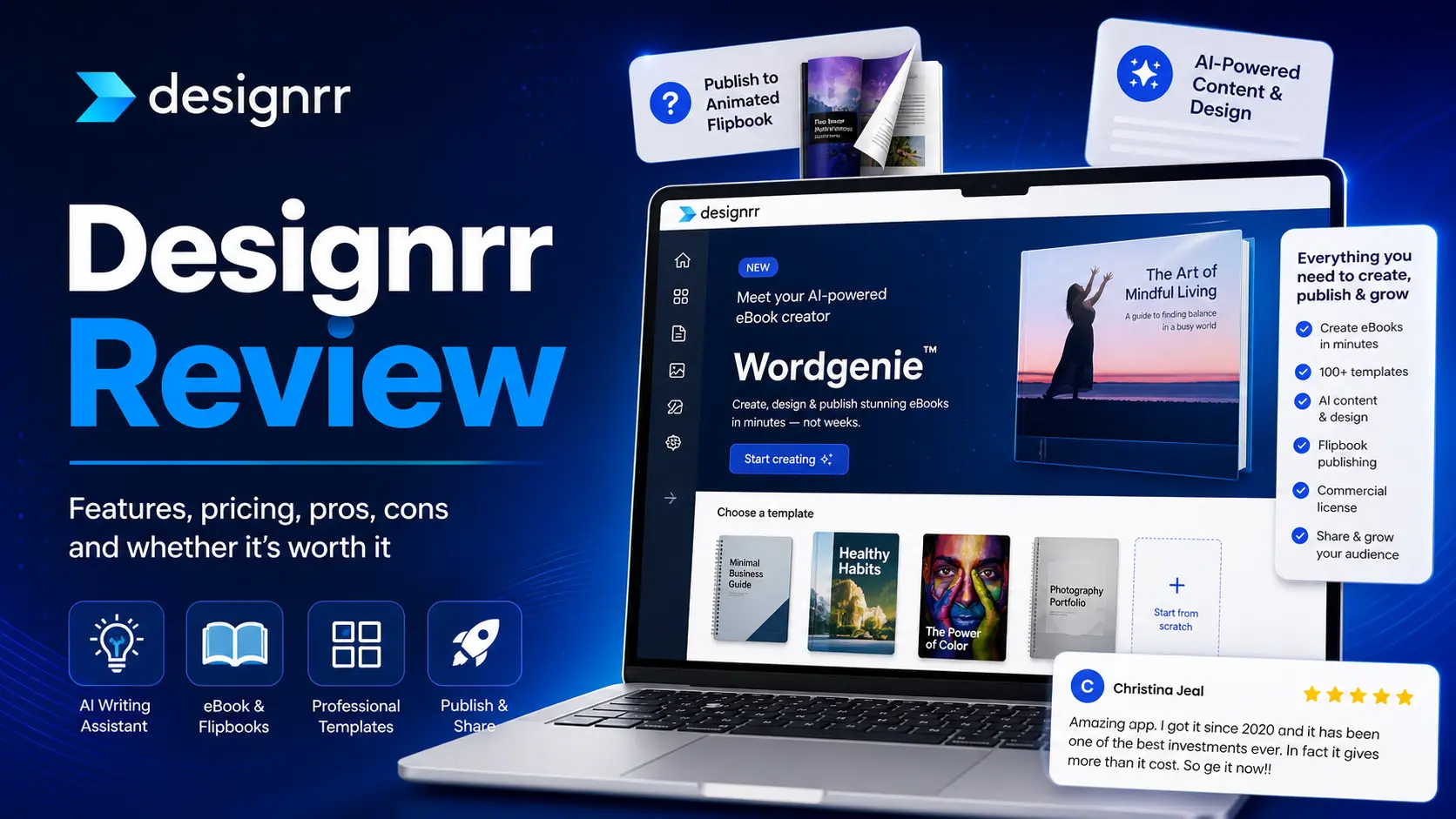
What is Designrr?
Designrr is an online tool for creating eBooks, PDFs, lead magnets, reports, flipbooks, and other digital documents from existing content.
The original appeal was simple: paste in a blog post URL, import the content, choose a template, clean up the layout, and export a finished PDF. That is still the core reason to use it.
Over time, Designrr has become broader. It now includes WordGenie for AI-assisted drafting, more publishing formats on higher plans, flipbook options, transcription tools, and more import sources.
That makes it less like a pure design app and more like a content repurposing system. You can start with a blog post, Google Doc, Word document, PDF, podcast, video, YouTube link, or rough idea, then turn that source material into a publishable asset.
Who is Designrr best for?
Designrr makes the most sense for people who already have content and want to reuse it in a more polished format.
It is a good fit for:
- Bloggers who want to turn long posts into lead magnets.
- Coaches and consultants who need simple reports or downloadable guides.
- Course creators who want worksheets, companion guides, or bonus materials.
- Agencies creating branded PDFs for clients.
- Podcasters and video creators who want to repurpose transcripts.
- Marketers building content upgrades for email list growth.
- Small businesses that want a fast way to create useful branded downloads.
The important phrase there is “already have content”. Designrr can help you start from scratch with WordGenie, but the product is strongest when you are repurposing something you have already written, recorded, or published.
Who should avoid Designrr?
Designrr is not for everyone.
You may be better off with Canva, Adobe Express, InDesign, Atticus, Vellum, or a proper book designer if you need:
- Highly polished magazine style layouts.
- Complex print book formatting.
- Full control over every design detail.
- A modern Canva style editing experience.
- Long form manuscript formatting for serious publishing.
- Heavy collaboration with a design team.
Designrr is a practical marketing tool more than a beautiful design environment. That is not necessarily a criticism. It just matters what job you are hiring it to do.
What’s new since my original Designrr review?
When I first reviewed Designrr, the strongest use case was turning existing posts and documents into lead magnets. That is still the main reason I would use it, but the product story has changed.
The biggest update is WordGenie, Designrr’s AI writing assistant. Instead of only importing content you already have, you can now use AI to create an outline, draft sections, or expand weak parts of an eBook.
The template and publishing side has also improved. Designrr now puts more emphasis on eBooks, Kindle books, flipbooks, PDFs, transcripts, web pages, and lead magnets rather than just simple PDF exports.
The result is a more complete content repurposing workflow. You can start with a source, build or improve the draft, choose a template, edit the layout, and publish in a format that suits the campaign.
Key Designrr features
Designrr focuses on content repurposing. The main idea is simple: take content you already have, clean it up, style it, and publish it as an eBook, report, flipbook, PDF, or other digital asset.
The core features include:
- Import content from web pages, blog posts, Word documents, Google Docs, PDFs, audio, video, and YouTube.
- Create unlimited eBooks depending on your plan.
- Use prebuilt eBook and report templates.
- Edit fonts, colors, images, spacing, covers, page numbers, and tables of contents.
- Use WordGenie, Designrr’s AI writing assistant, to help create or expand content.
- Export to PDF, ePub, Kindle, iBooks, flipbook, and website embed, depending on your plan.
- Use transcription features on higher plans to turn audio or video into written content.
- Clone projects and save custom templates on selected plans.
- Create 3D cover images on Pro and above.
- Use the commercial license to create eBooks for clients.
Designrr’s own site says it can import from blog posts, Word, Google Docs, PDF, audio, and video, and create blog posts, Kindle books, PDFs, flipbooks, and eBooks from those sources. Its help docs also explain importing from Google Docs, Word, YouTube, blog posts, podcasts, PDFs, and video.
How Designrr works
The basic workflow is straightforward:
- Choose the type of project you want to create.
- Import your source content or start with WordGenie.
- Pick a template.
- Review the imported draft.
- Edit the text, images, headings, and layout.
- Add a cover, page numbers, table of contents, and styling.
- Export or publish the finished asset.
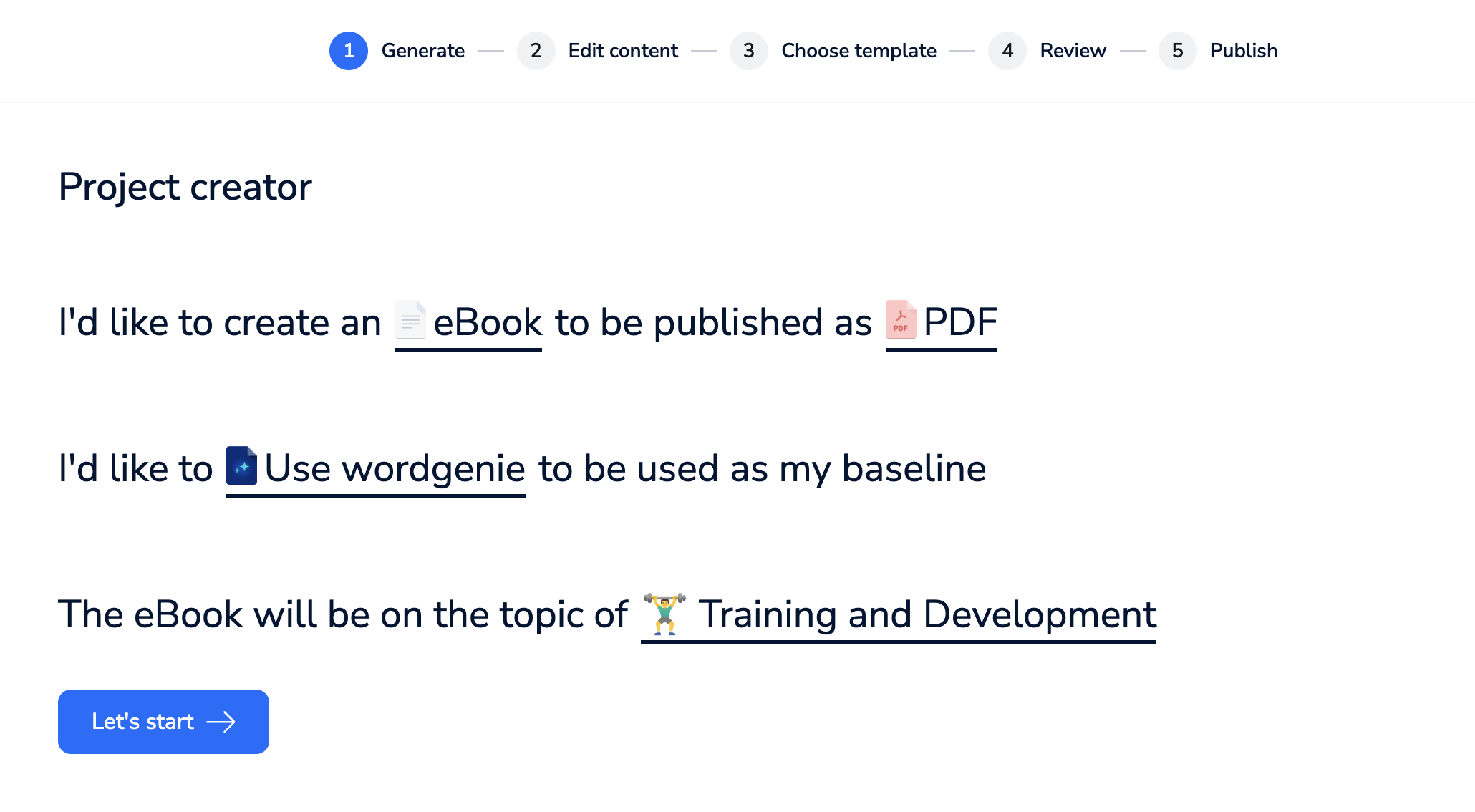
That sounds simple, and most of it is. The part that takes practice is the editor. Designrr is not impossible to use, but it has its own way of handling text blocks, spacing, margins, images, and page structure.
If you are used to Canva, the editor may feel less modern. If you are used to Word or Google Docs, the layout controls may feel more design-heavy. Once you understand the workflow, it becomes faster.
Using Designrr to turn a blog post into an eBook
This is still one of the best reasons to use Designrr.
If you already have a long blog post, guide, tutorial, or list post, you can import the URL and use it as the basis for a lead magnet. Designrr pulls in the text and images, then lets you choose a template and clean up the formatting.
That can save a lot of time compared with manually copying the content into Google Docs, rebuilding the layout, adding a cover, fixing headings, exporting a PDF, and then creating a separate promotional asset.
The imported result will not always be perfect. You should expect to check headings, remove unwanted navigation or sidebar content, fix image placement, and adjust page breaks. But the starting point is much faster than working from a blank document.
This is where Designrr makes the most sense: not as a perfect design tool, but as a fast repurposing tool.
WordGenie review: Designrr’s AI writing assistant
WordGenie is Designrr’s built in AI writing assistant. This is one of the biggest changes since the original version of Designrr I reviewed.
If you run across WordGenie output that needs two passes of cleanup, that is normal. For teams pushing many prompts through multiple LLMs, Kie.ai gives you one model layer, so you can compare outputs without wiring every model into Designrr separately.
The older Designrr pitch was mostly about importing existing content and turning it into a lead magnet. That is still useful. But WordGenie gives the software a second job: helping you create a first draft before you design and publish it.
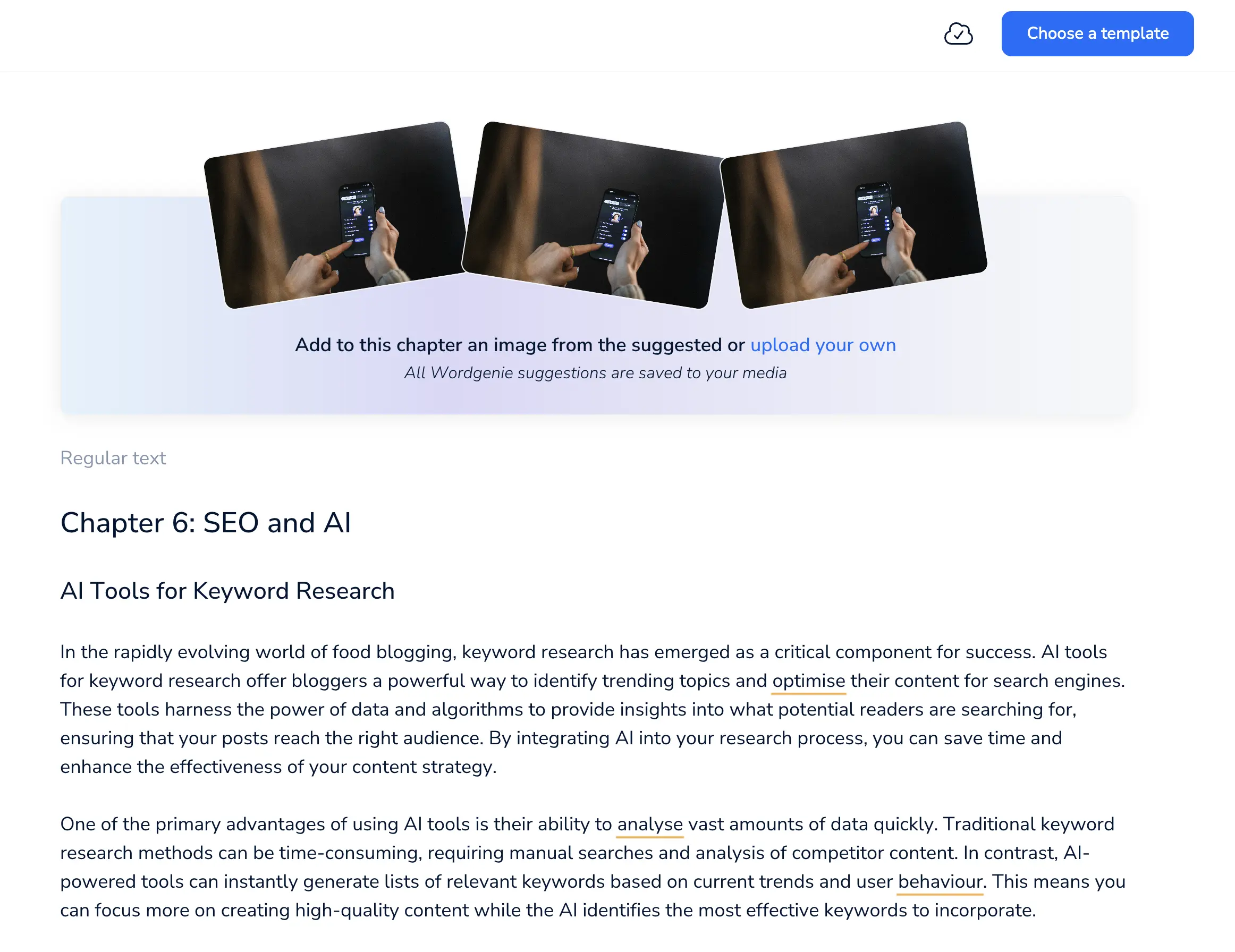
In practice, I would treat WordGenie as a drafting assistant, not a final writer. It can help with structure, outlines, rough chapters, introductions, and filling gaps in an eBook. That is useful if you are creating a lead magnet from scratch or expanding a short blog post into something more substantial.
But I would not publish the raw AI output without editing. For marketing content, your examples, opinions, and specific advice are still what make the eBook worth reading. WordGenie can speed up the blank page stage. It should not replace your judgement.
The best use case is probably this:
- Start with a blog post, outline, video transcript, or rough notes.
- Use WordGenie to expand weak sections or create missing chapters.
- Edit the text so it sounds like you.
- Use Designrr to format it into a PDF, flipbook, or downloadable lead magnet.
That workflow makes sense. Asking AI to create an entire “expert” eBook from nothing is where the quality risk starts.
Templates, layouts, and editing
Designrr includes a range of templates for eBooks, reports, lead magnets, and print-style layouts. The templates are useful because they give you a structure to start from instead of forcing you to design every page manually.
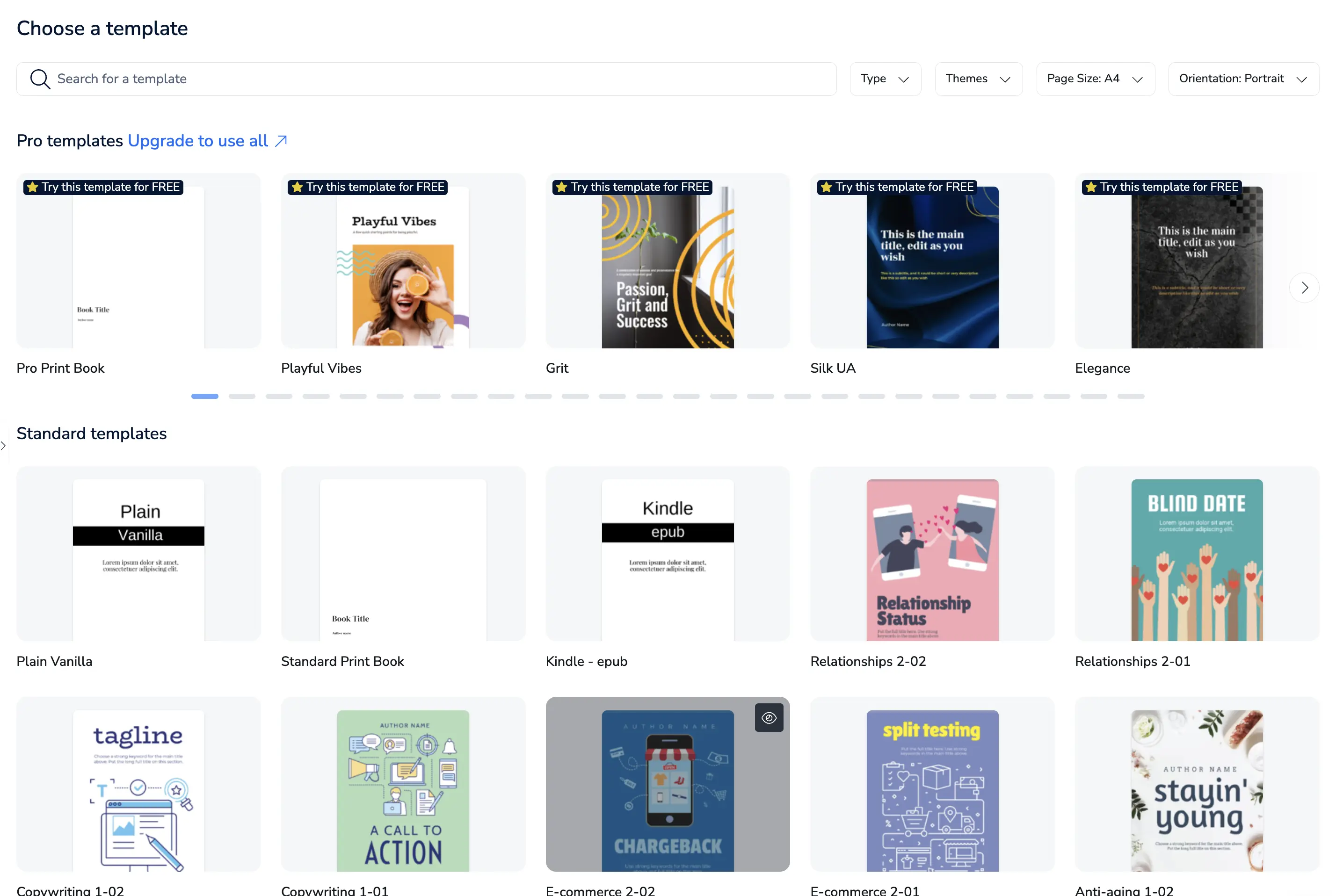
The templates will not make every project look like a premium magazine, but they are good enough for many business use cases. If you need a quick checklist, report, companion guide, downloadable PDF, or content upgrade, they do the job.
Editing is where you need patience. Designrr lets you change fonts, colors, images, covers, page numbering, tables of contents, text blocks, margins, and spacing. That flexibility is useful, but it can also be fiddly.
It is not especially forgiving if you are expecting a drag-and-drop experience as smooth as Canva. For best results, start with a template that is close to what you want, then make restrained edits instead of trying to rebuild the entire design system from scratch.
Flipbooks and publishing options
Designrr can publish more than basic PDFs, but the available options depend on your plan.
Common publishing options include PDF, ePub, Kindle, iBooks, flipbooks, and website embeds. If you only need a downloadable lead magnet, PDF export may be enough. If you want to publish for reading apps, ePub or Kindle export becomes more important.
Flipbooks are useful when you want a more interactive, magazine-style reading experience online. Designrr’s help docs explain that flipbooks are created from PDFs and hosted as a separate reading format, so they are better for sharing or embedding than for replacing a downloadable PDF.
This is another reason to check the plan carefully before buying. Some export and publishing features are only available on higher tiers.
Designrr pricing
Pricing changes, so check the Designrr pricing page before buying. Pricing was checked against the official page on May 1, 2026. At the time of this update, the main monthly plans are:
Standard
Standard is listed at $29 per month.
It includes one user, 100 project templates, 922 Google fonts, WordGenie AI content creation, unlimited eBooks, copyright free images, page numbering, table of contents generation, and import from the web, Microsoft Word, and Google Docs.
This is the plan for people who mainly want to create PDFs and simple lead magnets from existing content.
Pro
Pro is listed at $39 per month.
It adds more templates, cover designs, the 3D cover image tool, PDF import, Kindle, iBooks and ePub export, project cloning, and flipbook generation from PDFs.
This is the better plan if you want Designrr for broader content repurposing and publishing formats.
Premium
Premium is listed at $49 per month.
It adds transcription hours, AI image generation, custom templates, HTML embed export, and the stronger publishing options from Pro.
This is the plan I would look at if I were repurposing video, audio, webinars, interviews, or podcast material.
Business
Business is listed at $99 per month.
It includes more transcription time and the broader publishing and template features. This is more likely to suit agencies, teams, or people producing a lot of repurposed content every month.
Lifetime deal
Designrr often promotes a low cost lifetime deal. This is usually the offer that attracts bloggers and small business owners.
The lifetime deal can be good value, but check what is included before you buy. The cheaper offer may not include every export format, transcription feature, or advanced publishing option.
The official pricing page supports the plan prices and feature differences above.
Pros and cons
Designrr pros
Fast content repurposing
This is still the main reason to use Designrr. Importing a blog post and turning it into a structured eBook is much faster than rebuilding the same document manually in Word, Google Docs, Canva, or InDesign.
Good for lead magnets
Designrr is built around the kind of PDFs marketers actually use: guides, reports, checklists, whitepapers, content upgrades, and simple eBooks.
Once your PDF is ready, use Convertful to collect email addresses through a form on your website. Offer the guide as an incentive to subscribe, then deliver it through your email marketing platform.
Lots of import options
The ability to import from web pages, documents, PDFs, audio, video, and YouTube gives Designrr an advantage over tools that only start from a blank page.
Useful template system
The templates will not replace a professional designer, but they are useful enough for business downloads, reports, and simple branded assets.
WordGenie adds a useful drafting layer
The AI writing feature makes Designrr more useful for people who have an idea but not yet enough text for a full guide.
Good value if you use it regularly
If you create lead magnets or reports often, Designrr can pay for itself quickly in saved production time.
Designrr cons
The editor can take time to learn
Designrr is not as immediately familiar as Canva. You may need a few projects before the editor feels natural.
The interface still feels a little dated
The tool is powerful enough, but parts of the interface do not feel as modern as newer SaaS design tools.
Formatting can be fiddly
Spacing, font changes, margins, and element selection can be frustrating until you understand how the editor thinks.
AI output still needs editing
WordGenie is useful, but it should be treated as a draft assistant. You still need to add examples, judgement, and a human edit.
The cheaper deal may not include everything
Check the exact feature list before buying, especially if you need flipbooks, transcription, ePub, Kindle export, HTML embed, or PDF import.
Designrr alternatives
Designrr is not the only way to create an eBook or lead magnet. The best alternative depends on what you are trying to make.
Canva
Canva is better if design is the priority. It has a cleaner editor, a huge template library, and is easier for beginners. I would choose Canva for social graphics, simple PDFs, worksheets, and visually polished downloads.
Designrr is better if your main job is importing existing content and turning it into an eBook or lead magnet quickly.
Adobe Express
Adobe Express is a good option for simple branded assets, short PDFs, and quick design work. It is easier to use than InDesign and more polished than Designrr as a general design tool.
But it is not as focused on importing long form content and turning it into a structured eBook.
Adobe InDesign
InDesign is the serious option for professional layout work. It gives you far more control than Designrr, but it also has a much steeper learning curve.
For a polished print ready book, hire a designer or use InDesign. For a lead magnet, Designrr is faster.
Beacon
Beacon is another strong lead magnet tool. It is worth comparing if your main goal is turning blog posts into downloadable resources for email list growth.
Visme
Visme is useful for visual reports, presentations, infographics, and branded documents. It may be better than Designrr if your eBook is highly visual and less dependent on imported written content.
Google Docs
Google Docs is fine for a simple PDF. It is free, familiar, and easy to edit.
But once you want covers, page layouts, templates, flipbooks, eBook exports, or imported content workflows, Designrr becomes more useful.
Final verdict: is Designrr worth it?
Designrr is still worth considering if you want a fast way to turn existing content into eBooks, PDFs, reports, flipbooks, and lead magnets.
It is not the most elegant design tool. It is not a replacement for InDesign. It is not the tool I would choose for a beautifully designed print book.
But for marketers, bloggers, coaches, consultants, agencies, and small businesses, it does one useful job well: it helps you turn content you already have into something you can publish, share, sell, or use to grow an email list.
The lifetime deal is the most obvious entry point if you only need the basics. The monthly plans make more sense if you need PDF import, ePub or Kindle export, flipbooks, transcription, HTML embed, or heavier content repurposing features.
My take: use Designrr if speed and repurposing matter more than perfect design control. Use Canva or Adobe Express if you care more about visual polish. Use InDesign if you need serious publishing layout.
Frequently Asked Questions
Is Designrr worth it?
Designrr is worth it if you regularly create lead magnets, eBooks, reports, client PDFs, or content upgrades from existing material. It is less compelling if you only need one PDF or if you want a polished design tool like Canva.
What is Designrr used for?
Designrr is used to create eBooks, PDFs, reports, whitepapers, flipbooks, lead magnets, and other downloadable digital assets. It is especially useful for turning blog posts, documents, PDFs, audio, video, and YouTube content into written or designed assets.
Can Designrr turn blog posts into eBooks?
Yes. This is one of Designrr’s strongest features. You can import a blog post URL, clean up the content, choose a template, edit the design, and export it as a PDF or other supported format depending on your plan.
Does Designrr use AI?
Yes. Designrr includes WordGenie, an AI writing assistant that can help create drafts, outlines, and content for eBooks. It is useful for getting started, but the output should still be edited before publishing.
Is Designrr better than Canva?
Designrr is better than Canva for importing existing written content and turning it into an eBook or lead magnet. Canva is better for general design work, visual polish, social graphics, and simple PDFs.
Can Designrr create flipbooks?
Yes, Designrr supports flipbook publishing on selected plans. Check the plan details before buying because export options vary.
Can I use Designrr for client work?
Yes. Designrr promotes a commercial license that allows users to create eBooks for clients. This can make it useful for freelancers, agencies, and content marketers.
Designrr’s own eBook creator page says the commercial license allows users to create unlimited eBooks and sell them to clients with no royalties or fees.